
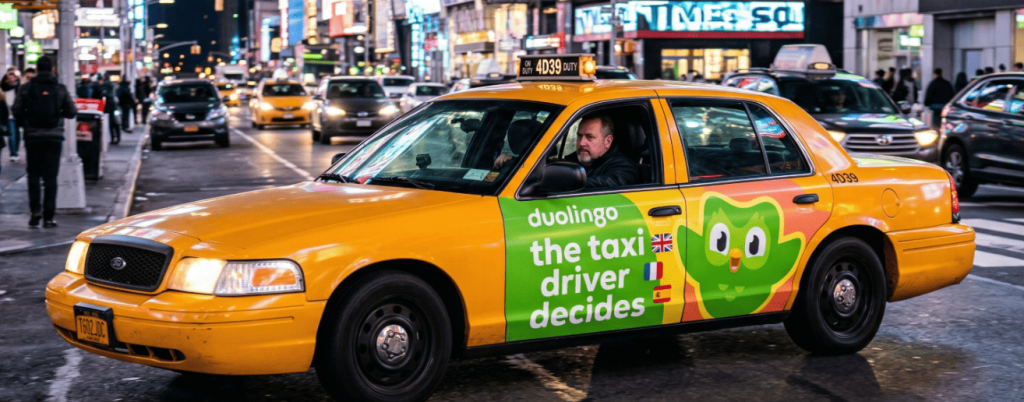
Can a taxi driver's choice determine the mental health of your employees?
Executive Summary:
- The Problem: Traditional interviews favor narcissists who master the art of self-presentation, while their true face only emerges in their interactions with “subordinates.
- The Case: A technically brilliant candidate does not fail because of numbers, but because of his arrogance toward a service provider. Those who kick downwards will never lead with respect.
- The Consequence: Toxic brilliance leads to an existential financial burden through employee turnover, bullying, and massively increased sick leave.
- The Solution: Recruiting must act as a protective shield. Involve service staff and consistently prioritize character over technical expertise.
The candidate’s most expensive phone call
At Duolingo, the taxi driver who picks up top managers from the airport is a formal part of the recruiting team without the candidates’ knowledge. One technically brilliant candidate used the ride for a condescending phone call, treating the driver like a servant.
He had no idea his behavior was already being evaluated. Those who treat service providers this way will never lead their subordinates with respect. Technical expertise is useless without social integrity.
The mask of perfection
Why does Duolingo use this hidden test? Narcissistic profiles master self-presentation in interviews perfectly.
They mirror exactly what leadership wants to hear. However, as soon as they feel unobserved, such as in the backseat of a taxi, the mask drops. In that moment, their true nature is revealed. Ignoring these signs means bringing a time bomb into the team.
An unguarded moment of observation protects the organization from people who shine towards their bosses but leave a trail of destruction behind them.

The price of toxic brilliance
The price of technical excellence without character is high. Studies reveal that the level of psychopaths in senior management is up to 20 percent, compared to just one percent in the general population. Data for narcissists is similar.
These individuals perfectly understand how to dazzle their superiors. Yet, within their teams, they create a toxic environment through bullying and intimidation.
The consequences are fatal:
- massively increased absenteeism
- high employee turnover and
- paralyzed innovation.
During my 20 years in corporate structures, I have seen this too many times. Toxic leadership is not just a “difficult personality trait”; it is an existential financial risk for any organization.
Recruiting as a shield
I am convinced that every company needs a “taxi test” for its leadership culture. It is not about spying on people but about ensuring that appreciation is not a matter of pay grade.
Whether it is the taxi driver, the receptionist, or the cleaning staff, true leadership is demonstrated through respect for every human being.
By consistently prioritizing character over pure competence, we protect the mental health of entire departments. This is the only way to prevent toxic brilliance from destroying tomorrow’s success.
Toxic leadership costs money and health.
I help you establish a culture of appreciation where character and performance go hand in hand. Let’s make your leadership culture future-proof.
